"To be nobody but yourself in a world that's doing its best to make you somebody else, is to fight the hardest battle you are ever going to fight. Never stop fighting." E. E. Cummings
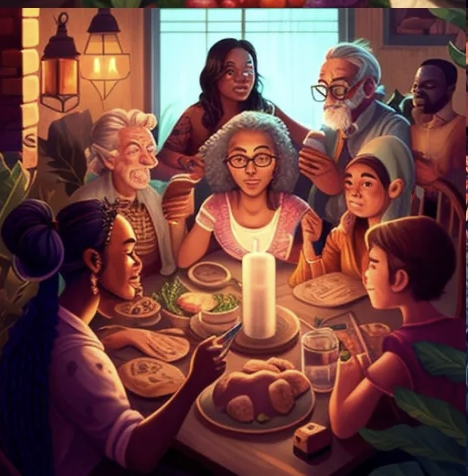
Tonight I’m reflecting on the difference between creating community and being a part of one.
When we create community, we’re holding a vision and creating a context where that vision can be realized through actions and interactions. When we’re in community, we’re supporting a vision and generously contributing to its members. As a community leader, how to reconcile when there is a disconnect between the actions of community members and the vision? As a community contributor, how to respond when the founders of the community change the vision yet you feel attached to the previous context and the existing community members?
Is it better(?) to build a community, or to join one? When is the work of sustaining a community worthwhile, and when is it best to join one which already has momentum?
I don’t have answers to these questions, and I’m not seeking answers at the moment.; however, I’d value your thinking on this.
A friend (Ian) shared a special poem that resonated with me, even more so because the author was an advisor to Dr. King and today is Martin Luther King Jr. Day. The imagery sticks with me. The metaphor of busy thoughts like traffic gives us power to visualize our stressors. The tension between the desire for stillness and peace, the need to question our lives to find meaning, and the yearning to be ambitious are deeply human feelings that hit home.
How Good To Center Down!
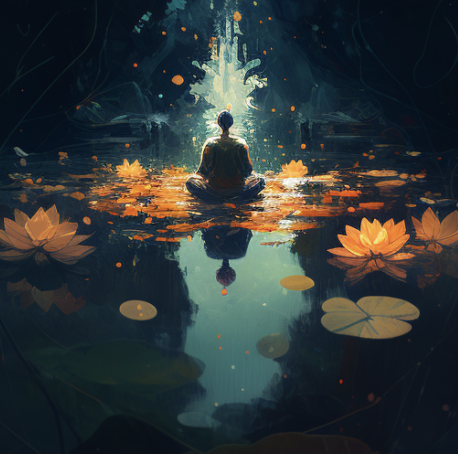
How good it is to center down!
To sit quietly and see one’s self pass by!
The streets of our minds seethe with endless traffic;
Our spirits resound with clashings, with noisy silences,
While something deep within hungers and thirsts for the still moment
and the resting lull.
With full intensity we seek, ere the quiet passes, a fresh sense
of order in our living;
A direction, a strong sure purpose that will structure our confusion
and bring meaning in our chaos.
We look at ourselves in this waiting moment –
the kinds of people we are.
The questions persist: what are we doing with our lives? –
what are the motives that order our days?
What is the end of our doings?
Where are we trying to go?
Where do we put the emphasis and where are our values focused?
For what end do we make sacrifices?
Where is my treasure and what do I love most in life?
What do I hate most in life and to what am I true?
Over and over the questions beat in upon the waiting moment.
As we listen, floating up through all the jangling echoes of our turbulence,
there is a sound of another kind –
A deeper note which only the stillness of the heart makes clear.
It moves directly to the core of our being.
Our questions are answered,
Our spirits refreshed, and we move back into the traffic of our daily round
Movies are encoded with a talk tracks for those who are visually impaired. This provides a description of what is happening on screen. Essentially, you can listen to any movie this way as if it were an audiobook.
Yesterday, we watched the touching and said movie, Otto. The theater accidentally switched on the audio talk track for the visual impaired. For a few minutes, the audience thought the voice was a part of the movie itself. We all were intrigued, as if experiencing a new form of storytelling. Even I at first, mistook the talk track for an instructive and overly enthusiastic narrator.
Then, we realized what it was. Those who were intrigued and amused became annoyed and impatient. The problem was solved soon enough, but in the 5 minutes it lasted I experienced an entirely new form of storytelling, and observed the behaviors of a perplexed audience.
We have questions buried in our hearts and minds that we don’t ask other people or even ourselves.
These might be questions we never thought to ask, or maybe we’re scared to ask them.
Make a list of the unasked questions on something that can be easily erased, like a paper towel that you can dip in water or a piece of paper that can be burned.
These questions we don’t ask are like keys to locked rooms.
You can ask your parents if you were always like this, ask your brothers or sisters if they remember childhood the same way as you do, ask your husband or wife about their dreams, or even ask yourself about what’s trying to happen right now.
The funny thing about locked rooms is you never know if you want to open them until you look inside.
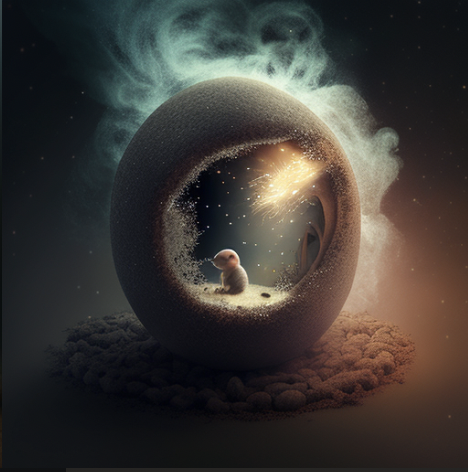
Salman Rusdhie famously asked, “How does newness come into the world? How is it born? Of what fusions, translations, conjoinings is it made? How does it survive, extreme and dangerous as it is?”
I buried this quote somewhere, maybe scribbled it on a napkin, or underlined it once, or whispered it to myself, pledging to remember it.
And I forget it entirely until today where I read the eulogy of Charles Simic, the poet, being eulogized by another poet, his dear friend:
“Charlie’s poems are certainly original in the only sense that counts: they were impossible to imagine existing before they were written.” -D.R.
That line brought back Rushdie and the feeling that true creativity lives beyond our ability to conceptualize it before it appears.
A conversation with a best friend today deepened my perspective and gave me a sense of peace. Citing the C.S. Lewis quote, “True Humility is not thinking less of yourself, it’s thinking of yourself less,” he reminded me that the service towards others is soothing and healing, and that the experience of suffering leads to knowledge and unintended, positive outcomes.
As he spoke, I visualized the self as an open jar, and the more compassion and service to others contained within it, the less room there is for fear and doubt. As the conversation concluded, he shared a verse near to his heart, which touched mine: “Who of you by worrying can add a single hour to your life? Since you cannot do this very little thing, why do you worry about the rest? “Consider how the wild flowers grow. They do not labor or spin.” I am grateful to have such a best friend.
One of the most profound questions that I’ve been asked was “do you need a crisis in order to wake up?”
If the meaning isn’t immediately obvious to you, I’ll ask my friend ChatGPT to put it in perspective:
The phrase “do you need a crisis in order to wake up” suggests that a person might not be fully aware or attentive to their circumstances or surroundings unless something drastic or problematic happens. It implies that the person may be in a state of complacency or unawareness and that a crisis or emergency is needed to shock them out of it.
This phrase could be interpreted in different ways and may be used to encourage someone to be more aware or mindful of their surroundings, to pay attention to potential problems or issues, or to encourage them to make changes in their life before a crisis occurs. It could also be used more broadly to suggest that people often do not make necessary changes or improvements until they are faced with a difficult or challenging situation.
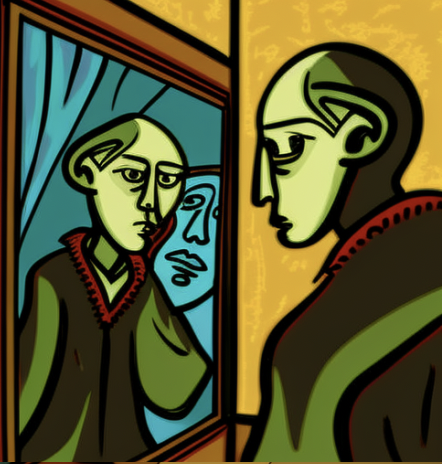
Of all the super powers available to us, perhaps the most potent and important is our ability to question the stories we tell ourselves about ourselves. Stories that we use to describe who we are. Stories that give us meaning and dimension, while at times confining us to the limits of who we understand ourselves to be. Those we love support us in this. They remind us of who we are and cultivate our essence. And in so doing, they reinforce who they believe us to be.
I’d like to challenge my understanding of these stories and emerge with fresh perspectives. By seeing ourselves differently, we’ll see the world differently, as well how we understand our place within it. What stories about yourself have you outgrown? Which assumptions about who you are should you challenge? If you figure this out, let me know; i’ll be working on it, too.–
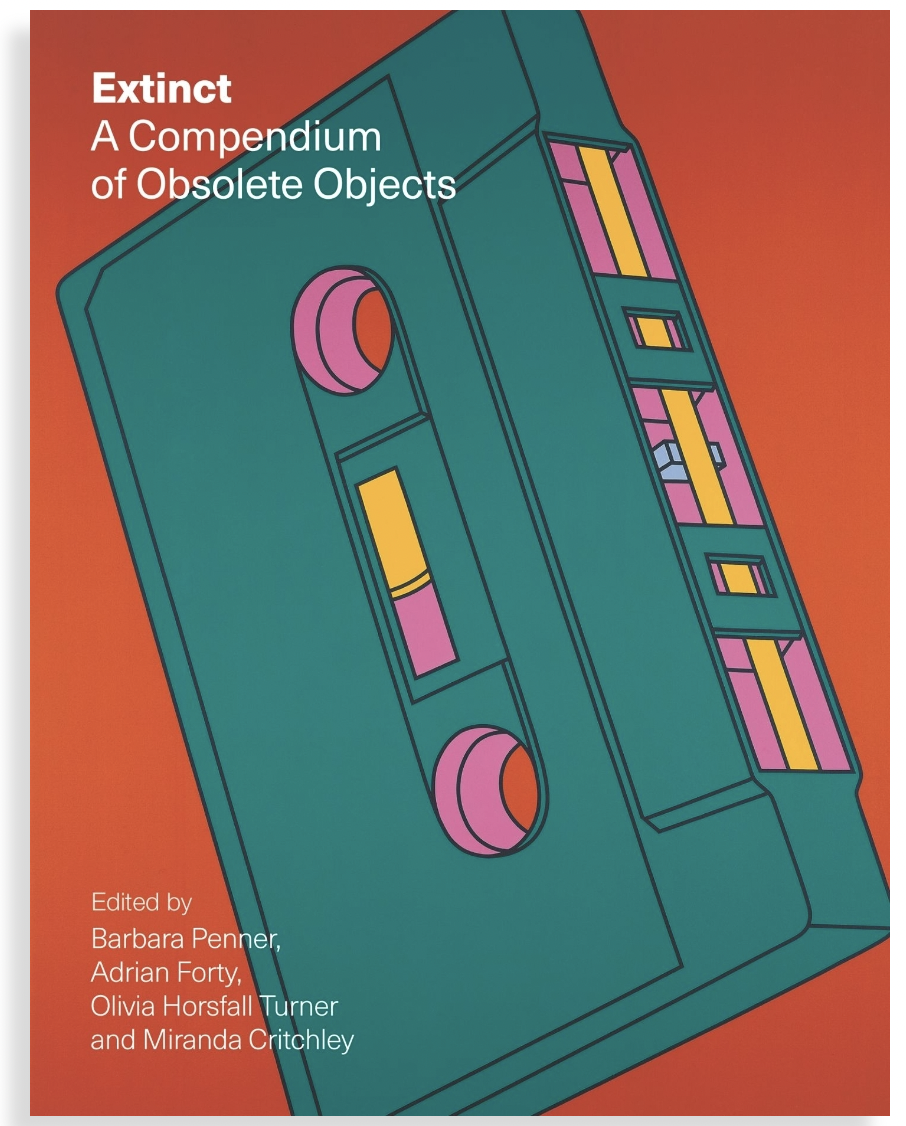
This book caught me eye. I haven’t read it, but I want to. I love the premise and am excited by the reviews.
“Extinct is filled with curious, half-remembered objects, each one evoking a future that never came to pass. It is also a visual treat, full of interest and delight.”





 A Life of Wonder