"To be nobody but yourself in a world that's doing its best to make you somebody else, is to fight the hardest battle you are ever going to fight. Never stop fighting." E. E. Cummings
I came across this quote again today, and it’s one of my favorites. I hope you appreciate it as much as I do.
“You must always work not just within but below your means. If you can handle three elements, handle only two. If you can handle ten, then handle five. In that way the ones you do handle, you handle with more ease, more mastery and you create a feeling of strength in reserve.” — Picasso
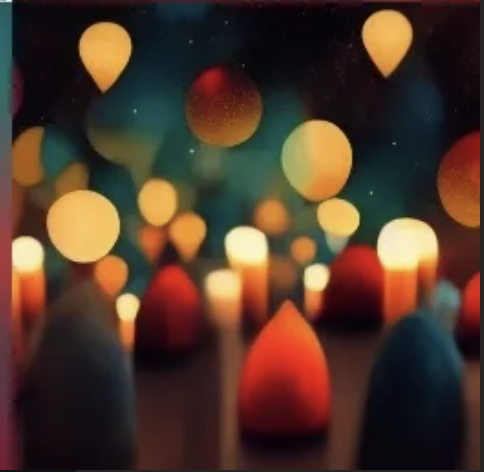
Tonight I wanted to write a poem, or a short essay, to showcase how even though we are fragile, in bodies that age and decay, these same bodies are resilient, like bulbs made from bulletproof glass with a soulful light shinning in their middle. So easily we forget the strengthen and resilience of the body. Using these themes, I asked AI to compose a short essay:
The moon, a delicate and luminous sphere, rises in the sky, casting its gentle glow upon the rippling waters below. It is a reminder of our own fragility, of the fleeting nature of life and the impermanence of all things.
But as I stand here, gazing at the beauty of the moon and water and trees, I am struck by a sense of strength and resilience. The trees, with their deep roots and sturdy branches, stand tall and proud, weathering the storms of life with grace and determination. The water, though seemingly fragile and fleeting, holds within it a power and force that can shape and change the very earth itself.
And so it is with us, dear reader. Though we may be fragile and fleeting, we are also strong and enduring. We are capable of weathering the storms of life and emerging from them stronger and more resilient. We are capable of shaping and changing the world around us, leaving our mark on the world in ways that will endure long after we are gone.
So let us embrace our fragility and our strength, let us find beauty and inspiration in the moon and water and trees, and let us be grateful for the precious gift of life and the opportunities it brings.
Now that more is knowable, now that search engines and AI can answers nearly any question you have, now that AI art generators draw what you see in your minds eye in seconds, now more than ever imagination matters. We must retrain ourselves to imagine. We must nurture creativity and encourage liberal arts for providing us with language to express and feed our imagination. The next 100 years belongs to those who can imagine better and express what they imagine to new forms of intelligence.
A special credit to Andrew Slack for coining the expression “Imagine Better.”
I realize there’s an unusual place for poetry: in the prompt we feed AI. Surely, the prompts make spectacular imagery, but more than that, they offer clues into the mind and the heart of those entering them. For example, imagine the prompt I entered to produce this image:
Here’s the answer: /imagine: the most majestic firefly lighting up the solitude of two people praying.
Let’s look into recent entries of text prompts not for the image, but for the poetry:
smiling African woman. Flowers in her hair; adorable little fire alien; magnificent pink lynx; anthropomorphic tiger head hunter, full body; oblique-angle candid shot of waifu(30-years-old) looking-back; rugged cyberpunk/dieselpunk wanderer wearing a gas mask; portrait of a Thai middle aged female on her 40’s, oil paint on canvas; environmental art of woman as translucent jelly slime girl wearing lace; ull body photography, boat, a sad kids boy bespoke dressed vintage ship cruise….
Each image fragment birthed a fully formed image, a world emerges from an incomplete thought.
A great day filled with insights from the poem, “fire” below to being gifted a mantra, “do your best, surrounded the rest.”
Fire
What makes a fire burn is space between the logs, a breathing space. Too much of a good thing, too many logs packed in too tight can douse the flames almost as surely as a pail of water would. So building fires requires attention to the spaces in between, as much as to the wood.
When we are able to build open spaces in the same way we have learned to pile on the logs, then we can come to see how it is fuel, and absence of the fuel together, that make fire possible.
We only need to lay a log lightly from time to time. A fire grows simply because the space is there, with openings in which the flame that knows just how it wants to burn can find its way.
A close friend taught me a lesson today. “Thinking is taking an action.” I appreciated this lesson because it gave me a sense of agency over my thoughts and when I chose to think and when I would rather not. The implication is having power over rumination and distressing reflection by choosing how much time to give to the “action of thinking.” Of course I’m mindful of Shakespeare’s “O teach me how I should forget to think.” While we can’t learn to stop thinking we can decide how much time to lend to it.
Let’s see what our favorite AI has to say about this:
“It’s important to remember that thinking is a natural and necessary part of life, and we can’t simply stop thinking altogether. However, it is possible to reduce excessive or unnecessary thinking, which can help us to enjoy life more. Here are a few specific steps you can take to help you think less and enjoy life more:
Practice mindfulness. Mindfulness is the practice of paying attention to the present moment, without judgment. This can help you to break the habit of excessive thinking, and to stay grounded in the present moment.
Take regular breaks from technology. Spending too much time on our phones and computers can stimulate our minds and increase the amount of unnecessary thinking we do. Try to take regular breaks from technology, and spend some time in nature or doing activities that don’t require screens.
Engage in physical activity. Exercise has been shown to help reduce excessive thinking and improve mental clarity. So, try to incorporate regular physical activity into your routine.
Practice gratitude. Focusing on the things we are grateful for can help to shift our mindset away from negative or excessive thinking, and towards a more positive and enjoyable state of mind.
Seek out new experiences. Trying new things and engaging in new experiences can help to keep our minds fresh and prevent us from getting stuck in repetitive thought patterns. So, try to step out of your comfort zone and try something new.”
The community organization Skip the Small Talk created this list of questions to break the ice during the holidays. Here are my answers.
Do you have a favorite holiday tradition? What’s special to you about it? Thanksgiving. It centers gratitude, family and food in our lives, also is a reminder that the holiday is about perspectives and that the stories we hold dear to our heart have many other sides and ways of telling.
What is one thing you would change about the holidays – either in your own life or in the world – if you could? I wish I lived closer to my family and my wife’s family so we can celebrate together.
What is a holiday from a culture other than your own that you admire or want to learn more about? So many. I’ll start with Japanese.
If you could choose a non-material gift to receive, what would it be and why? Time. Nothing is better than time with someone I care about.
Are the holidays something you look forward to or are meaningful to you? Why or why not? While I’m not a sports fan, I’ve always enjoyed hosting Super Bowl parties.
What holiday memory has stuck with you the most? One involving a drum circle in New Mexico.
Smells and sounds are two of our senses that bring back the most memories – are there any smells or sounds you encounter during the holidays that bring you back to a particular memory or stage of life? What feelings does that bring up for you? The voices of my parents talking in the kitchen. The smell of onions being fried.
What’s different about your life from last holiday season? What changes are you grateful for and which ones are challenging? An understanding of the deep importance of health and systems of support in my life.
Which person or people have played the biggest roles in your holiday experiences? Parents and my wife.
What does holiday joy look like to you? Has it changed through different stages of your life? Spending time with those I love, exploring new countries and cuisines, sharing stories with old friends. I increasingly value experiences above all else.
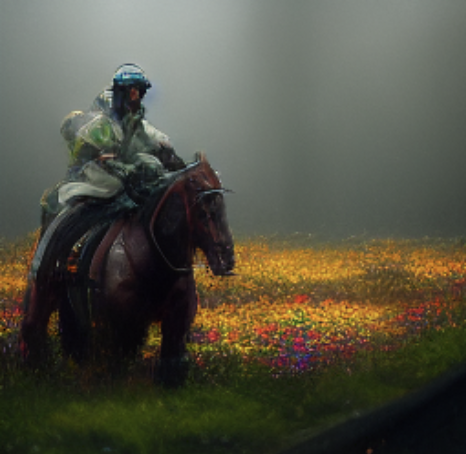
The more we rely on AI, the more important asking better questions will become. Those who understand how to use AI’s prompts, who have a command on vivid and specific language and a range of cultural and stylistic references to draw from, will be able to use AI to create more intentional and effective solutions: whether they be AI-generated art, or even AI-generated poems, or complex programs. Just as those with a command of photoshop can harness and express their imagination through an endless set of choices, AI expertise will be increasingly more valuable to how we interact with the world. We are the jockeys; AI is our racehorse…for now.




 A Life of Wonder