"To be nobody but yourself in a world that's doing its best to make you somebody else, is to fight the hardest battle you are ever going to fight. Never stop fighting." E. E. Cummings
“You can pick all the flowers, but you can’t stop the spring.” – Pablo Neruda
the beauty of this slice of poetry is in its framing of the inevitable, not as something to be dreaded, feared even (i.e., death), but as something to be celebrated. The eternal forces are always with us, guiding us towards beauty.
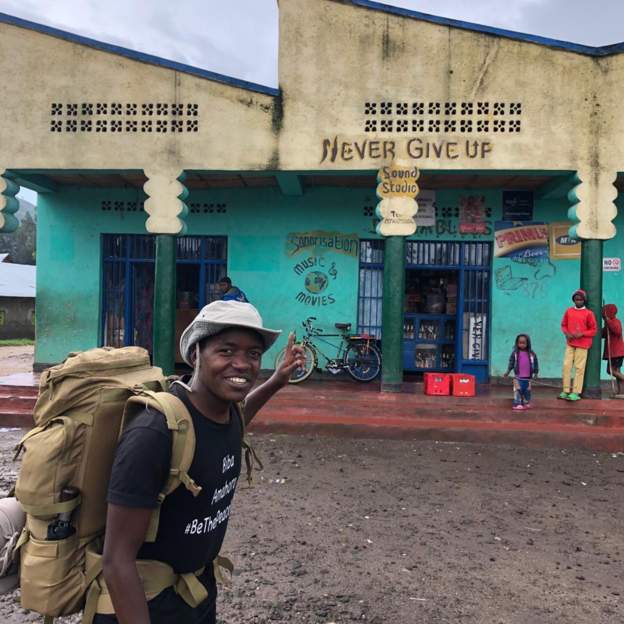
Tonight I went to a workshop and talk by a survivor of the Rwanda genocide. The premise of the workshop was to reflect on why we tell stories and to invite us to tell new ones for the new year. The facilitator of the event founded a nonprofit designed to create healing in Rwanda. The nonprofit gives a cow to share between two families: one who survived genocide and one who contributed to it. In nurturing the cow, they simultaneously cultivate healing between them. I am intrigued by how their shared love of an animal can produce a love and healing for their community, too.
I stumbled upon a breath-taking essay which provides language and perspective to understanding and expressing life’s challenges. The words are accurate and affirming. They offer a way to relate to the world which I find both comforting and true.
“In her essay “The Pain Scale,” Eula Biss notes that the diagnostic words we use to describe physical pain are all metaphor: “burning, stabbing, throbbing, prickling, dull, sharp, deep, shallow.” So, too, are the words I use to describe anxiety: stuck, scattered, heavy, leaden. We use these metaphors so freely that we don’t even think of them as such.
Metaphor provides a scaffold to build into the spaces beyond our comprehension. When we struggle to describe a physical sensation, we use a comparison; when some scientists seek to explain the interactions between neurons, they liken the brain to a computer. By doing this, we put the unknown in terms of the known, in an act that both illuminates and obscures: after all, a brain is both like a computer and not. Metaphor rushes in to fill gaps, to make meaning, and to conceal.
In her seminal book Illness As Metaphor, Susan Sontag notes a similar process of metaphoric meaning-making in the language surrounding illness. “Any important disease whose causality is murky, and for which treatment is often ineffectual, tends to be awash with significance,” she writes. “The disease itself becomes a metaphor.” In the nineteenth century, that disease was tuberculosis, often equated with spiritual and artistic transcendence: Keats, frail and ethereal, drowning in his own blood at the age of twenty-five. In the process of assigning metaphor, we use familiar concepts to partially illuminate what we cannot understand while ushering the rest out of view. This rescues us from uncertainty. It comforts.”
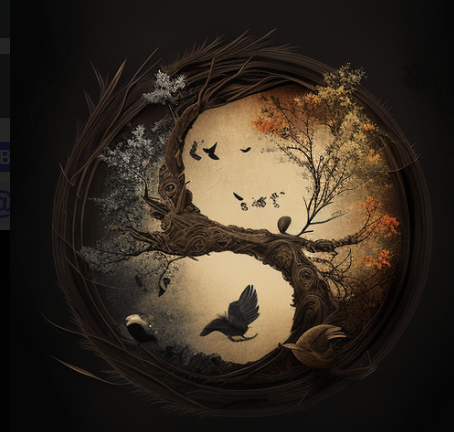
A young scholar introduced me to a concept to me today which I want to spend more time exploring. It’s called, Wu Wei, an important concept from Taoism and Confucianism: “a state of unconflicting personal harmony, free-flowing spontaneity and savoir-faire, it generally also more properly denotes a state of spirit or mind.” In the words of philosopher Alan Watts, “the art of getting out of one’s own way…. The river is not pushed from behind, nor is it pulled from ahead. It falls with gravity.”
I know many people devout their lives to understanding and practicing this, and I’m offering it here as reminder to explore and an open door to walk through when the time is right.
I’ve enjoyed several Korean television shows and movies we’ve watched recently. The dialogues are sharp and subtle, and they are as driven by character as they are by plot. Clearly that’s over-generalizing, presumably in a good way, but I’m sensing my emerging interest growing in this genre. I asked AI for a list of recommendations and would appreciate yours, if you know the genre well.
“Itaewon Class” (2020) – This drama tells the story of a group of young people who team up to turn their dreams into reality and was a major commercial and critical success. It has a rating of 8.6/10 on IMDb and a rating of 9.3/10 on MyDramaList.
“Crash Landing on You” (2019-2020) – This romantic comedy-drama tells the story of a South Korean heiress who crash lands in North Korea and falls in love with a North Korean officer. It has a rating of 8.6/10 on IMDb and a rating of 9.1/10 on MyDramaList.
“Reply 1988” (2015-2016) – This coming-of-age drama tells the story of a group of friends growing up in the 1980s and was a major commercial and critical success. It has a rating of 8.5/10 on IMDb and a rating of 9.1/10 on MyDramaList.
“SKY Castle” (2018-2019) – This satirical drama tells the story of the lives and secrets of the residents of a luxurious residential area called SKY Castle and was a major commercial and critical success. It has a rating of 8.4/10 on IMDb and a rating of 9.1/10 on MyDramaList.
“Goblin” (2016-2017) – This romantic fantasy drama tells the story of a modern-day goblin trying to end his immortal life and was a major commercial and critical success. It has a rating of 8.4/10 on IMDb and a rating of 8.9/10 on MyDramaList.
Give the lonely a plant to care for. Give those without purpose a teen to mentor. Give those in the midst of fear an opportunity to create a safe space for other who share their fear. Let us grow the capacity in ourselves that we long for in others.
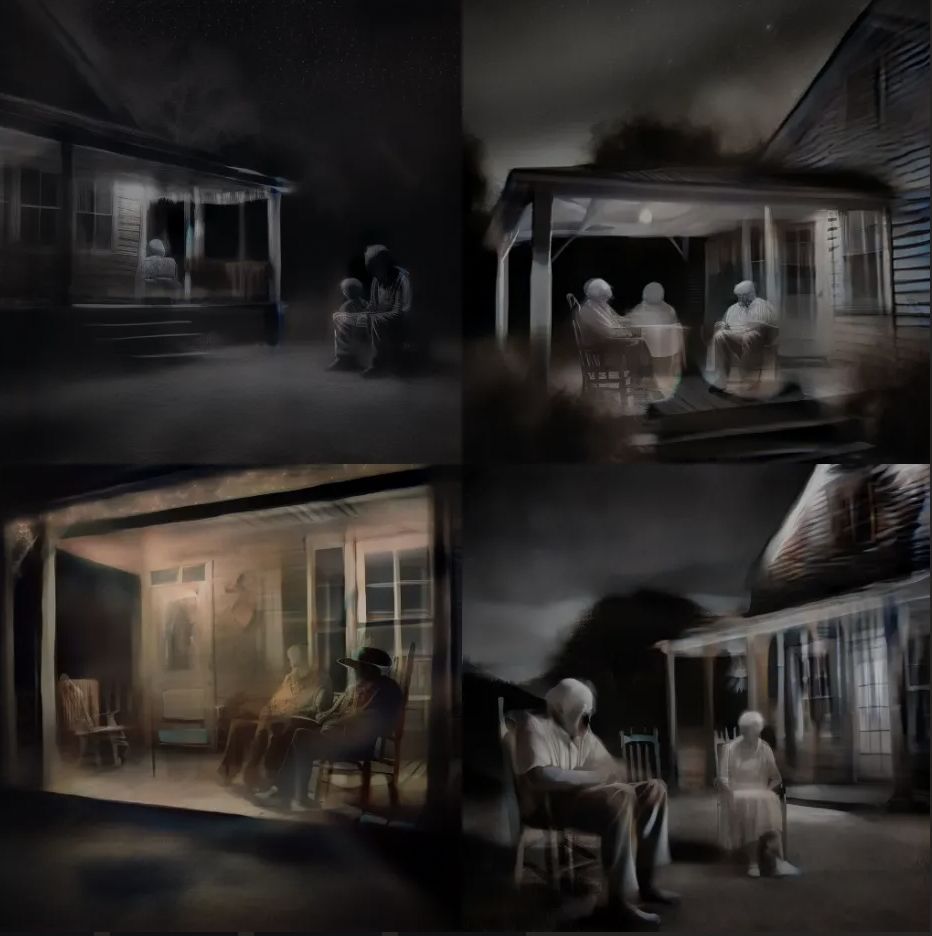
I often return to a memory that I’m not even sure is mine. There’s a house in the country and a porch surrounding it. It’s night. The grandparents are sitting in their chairs. The dark night is illuminated by fireflies. We hear dogs in the background. Maybe someone is playing the harmonica. Throughout the years, the texture of this memory changes. I can’t bring into view anything more specific: not an action, a sound, or a conflict, but I can’t seem to relinquish the memory either, or the feeling that something important happened that I’m forgetting.
Incorporating play into your life can bring joy and levity in the midst of the responsibilities and burdens that surround us. Play can ignite humor and lightness, serving as a foundation for creating something more meaningful.
As a child my favorite ways to play were watching ants carry food, setting up elaborate battles with green plastic solders, creating theatrical events with my dog and an audience of stuffed animals, and climbing muddy mini mountains behind my home.
Collecting, too, was a favorite form of play: from baseball cards and stamps to rocks and fossils, play wasn’t in the possession of the collectable, but rather in the sharing of the collection with friends.
There’s an advantage to conceiving thinking as an action. In some ways, then, it can be managed. You can schedule it. You can recognize when you’re doing too much of it. You can understand its limitations: that thinking alone can’t solve a problem and that other tools or methods are needed. You can determine whether thinking leads to helpful outcomes, or whether it sends you round and round a never ending path of being tormented by possibilities and unhelpful analysis. I appreciate labeling thinking as action because naming it in this way gives it a fresh meaning and new opportunities to explore what’s possible.



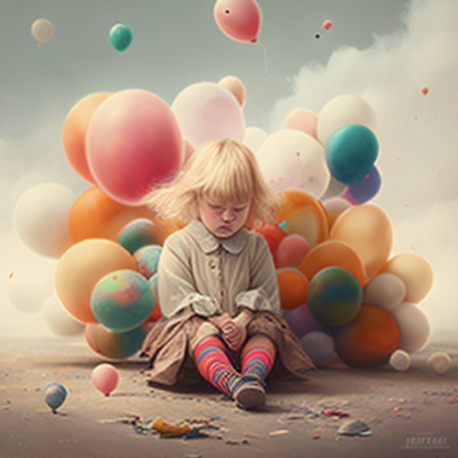

 A Life of Wonder